Manufacturing
Empowering Production: With Innovative Finance Solutions
Manufacturing Equipment Finance – Are you seeking to improve your manufacturing capabilities? At Commercial Funding Partners we offer assistance, in acquiring cutting-edge equipment. We aim to assist your business in increasing efficiency meeting industry requirements and staying competitive. Through our financing options, we work to help qualified borrowers identify resources for manufacturing, assembly operations, and beyond.
Recent Funding of U.S. Manufacturing
Funding Success - $4,500,000
60-month Operating lease – This medical manufacturing company has several lines that were outdated and need to be replaced with the latest industry improvements. In this industry, timing is everything. Quickly and efficiently getting products to market can pay for an entire project over just a few quarters.
Direct Lender Approving Manufacturing Equipment Projects
At CFP, we specialize in providing customized financing solutions for manufacturing firms. We aim to help our clients acquire the equipment to enhance productivity and support growth. We understand the importance of investing in manufacturing tools to support project success when operations demand cutting-edge machinery. Our financing options are crafted to ease burdens and offer choices tailored to budgets. Whether you need equipment for manufacturing, assembly, or any other production process, we are eager to discuss the funding required for each machinery component with you.

Types Of Manufacturing Equipment We Finance
The manufacturing sector relies on a range of machinery to aid in the processes involved in creating products. This includes a mix of tools and equipment for manufacturing, spanning from traditional mechanical tools to advanced computer-controlled systems that cater to the industry’s varied needs and technologies used today. We provide manufacturing equipment finance to established operations from $250,000 to $100M+ per project.

Machine Tools
- Lathes: These machines shape metal or wood by rotating the workpiece against cutting tools.
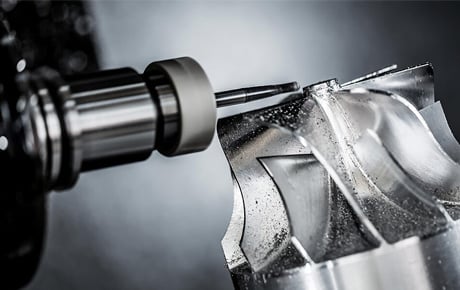
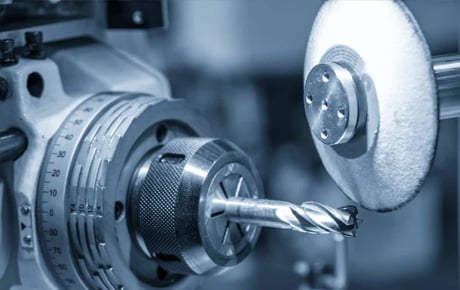
- Milling Machines: Milling machines remove material from a workpiece using cutters.
- Drilling Machines: These are utilized to make holes in metal, wood, or other materials.

Grinding and Polishing Equipment
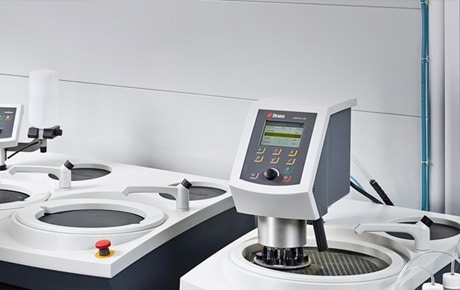
- Grinders: These are used for surface finishing through abrasion with a rotating wheel.
- Polishing Machines: They create shiny surfaces through rubbing or chemical treatments.

Forming Machinery
- Presses (Mechanical and Hydraulic): Employed to shape or cut metal by applying pressure.
- Bending Machines: These devices bend materials like tubes and sheets into desired shapes.
- Stamping Machines: These are utilized for shaping or cutting metal by deforming it with a die.

Cutting Tools
- Laser Cutters: Utilize high-powered lasers to cut materials.
- Plasma Cutters: Use a stream of plasma to cut through metal.
- Waterjet Cutters: Use high-pressure water to cut various materials.

Molding Machinery
- Injection molding machines: Used to produce parts by injecting material into a mold.
- Blow Molding Machines: Produce hollow plastic parts like bottles.
- Compression Molding Machines: Shape rubber or thermoplastic materials using heat and pressure.

Assembly Equipment
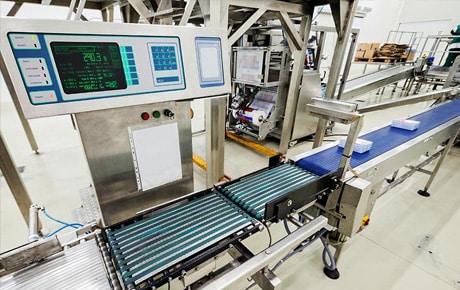
- Conveyor Belts: Transport parts between different production stages.
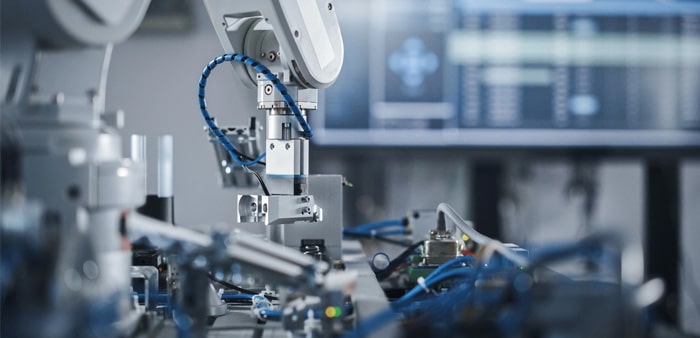
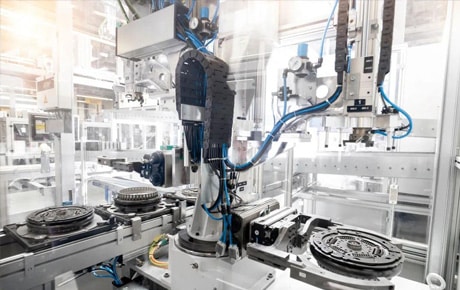
- Robotic Arms: Perform welding, picking, and placing components.
- Automated Assembly Lines: Efficiently assemble products, often incorporating robotics technology.

Painting and Coating Systems
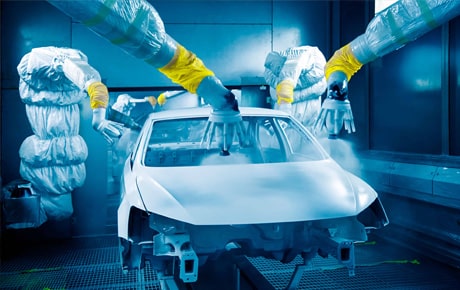
- Spray Painting Machines: Coat surfaces uniformly with paint.
- Powder Coating Booths: Apply protective and decorative finishes using powder coating techniques.

Packaging Equipment
- Filling Machines – Dispense precise amounts of product into packaging containers.
- Applying Labels: Stick labels on products or packaging.
- Securing Packaging: Seal the packages to safeguard the contents.

Material Handling Machinery
- Forklifts: These are used for lifting and moving items.
- Cranes: Employed to lift, lower, and shift materials horizontally.
- Hoists: Lift or lower loads using a drum or lift wheel.
Manufacturing Equipment Brands We Finance
Manufacturing machinery contributes to enhancing production efficiency and product quality. Here is a list of manufacturers known for their reliable equipment utilized in industries, like aerospace, electronics, and consumer goods. These companies are distinguished for their progress and innovative approaches in the manufacturing equipment sector crucial for boosting effectiveness and output, in manufacturing processes.

Siemens AG
Known for its wide range of automation equipment and digital solutions.

General Electric (GE)
Provides various manufacturing tools, especially for the aviation and energy sectors.

Mitsubishi Electric
Offers a broad array of automation products, including CNC systems, servo motors, and drives.

Schneider Electric
Specializes in energy management and automation solutions.

Rockwell Automation
Known for its industrial automation and information technology products.

Fanuc Corporation
Renowned for its robotics and CNC systems used in manufacturing.

ABB Ltd.
Offers robotics, power, heavy electrical equipment, and automation technology products.

Honeywell International Inc.
Known for its automated material handling systems, including AGVs.

Emerson Electric Co.
Provides engineering services and manufacturing automation products.

Amada Co Ltd.
Specializes in metal cutting, forming, shearing, and punching machines.
CRG Automation
Premier provider of packaging manufacturing equipment, offering case packers, robotics, palletizers, etc.

DMG Mori Co., Ltd.
Produces cutting machine tools for turning and milling and advanced manufacturing solutions.

Komatsu Ltd.
This company provides construction and advanced automation for heavy industrial uses.
Haas Automation Inc.
Manufactures CNC machine tools, including vertical machining centers and lathes.

Okuma Corporation
Specializes in CNC machine tools, with products ranging from lathes to grinders.
Top Reasons To Upgrade Your Equipment
- Boosting Efficiency - Switching to advanced machinery can improve your production efficiency. The latest equipment tends to work with precision and uses less energy.
- Elevating Product Quality - Modern machinery often boasts capabilities and top-notch control systems, which can improve the consistency and quality of the products being made.
- Trimming Operating Costs - New technologies usually run efficiently in terms of energy usage. They may need fewer resources, like water or electricity, cutting overall operating expenses.
- Meeting Environmental Standards - Outdated equipment usually meets regulations. Upgrading can lessen emissions and waste, aiding a manufacturing plant in reducing its footprint and meeting sustainability criteria.
- Expanding Capacity - Upgrading equipment enables a manufacturer to increase production capacity without enlarging the footprint of a facility. This is especially advantageous for companies aiming to expand or meet rising market demands.
- Minimizing Downtime - Aging equipment is prone to breakdowns, leading to Downtime that disrupts production schedules. Newer machinery is usually more dependable. It can come equipped with maintenance features to avoid unexpected breakdowns.
- Enhanced Compatibility with Modern Technology - Updated equipment often offers improved compatibility with information technology systems and automated technologies, which can streamline operations and provide insights for business decisions.
- Adjusting to Evolving Consumer Preferences - Consumer trends and demands can shift rapidly. Upgrading equipment can offer flexibility, enabling manufacturers to adjust their production processes to accommodate new product variations or shifts in consumer preferences.
- Competitive Edge - Investing in cutting-edge technology can yield an advantage. It can boost a manufacturer's Capacity to deliver high-quality products, operate efficiently, and adapt promptly to market dynamics.

Client Success - Case Study
An industrial manufacturer decided to buy a large volume of parts from one of their vendors. They decided to purchase their vendor. They did not have the cash to make the full purchase. CFP was able to leverage the $1,200,000 of the used vendor equipment and secure the funding on a 48-month capital lease enabling this customer to make a strategic acquisition.
Financing for this industry: Manufacturing equipment financing.