Your balance sheet may be investment grade, but your capital allocation isn’t. Traditional CAPEX is quietly dragging ROIC, compressing free cash flow, and locking up capital where it works the least.
Most CFOs don’t question CAPEX. It’s seen as disciplined. Safe. Aligned with long-term growth. But here’s the reality: when you deploy eight figures into assets that start depreciating on day one, you’re not just investing—you’re committing to a slow bleed of capital efficiency. The issue isn’t the asset. It’s the structure. Capital gets trapped, flexibility disappears, and returns underperform, all while better uses of that capital go unexplored.
The Brutal Math of Buying

- The Opportunity Cost: That $10M could have been R&D, a strategic acquisition, or a dividend. Instead, it’s sitting in a cooling room, losing value every second.
- The 40% Premium: Between maintenance, rapid obsolescence, and the cost of capital, “owning” tech often costs 40% more than its lifecycle than a structured finance model.
- The Innovation Gap: By the time you’ve fully depreciated that hardware in five years, it’s a dinosaur. Your tech is old, but your balance sheet says you must keep it.

Efficiency is the New Equity

Top-tier CFOs are realizing that ownership is an ego trip and a poor use of capital. By shifting from “Buy and Hold” to Strategic Equipment Finance, IG companies are unlocking a level of agility that cash-buying simply can’t touch. It’s the difference between being a “legacy giant” and a “scalable powerhouse.”
Traditional CAPEX | Strategic Financing |
Heavy upfront cash drain | Preserved liquidity for M&A |
Locked into 5-year cycles | Seamless tech refreshes |
High risk of obsolescence | Predictable OpEx scaling |
Stop Paying the "Ownership Tax"
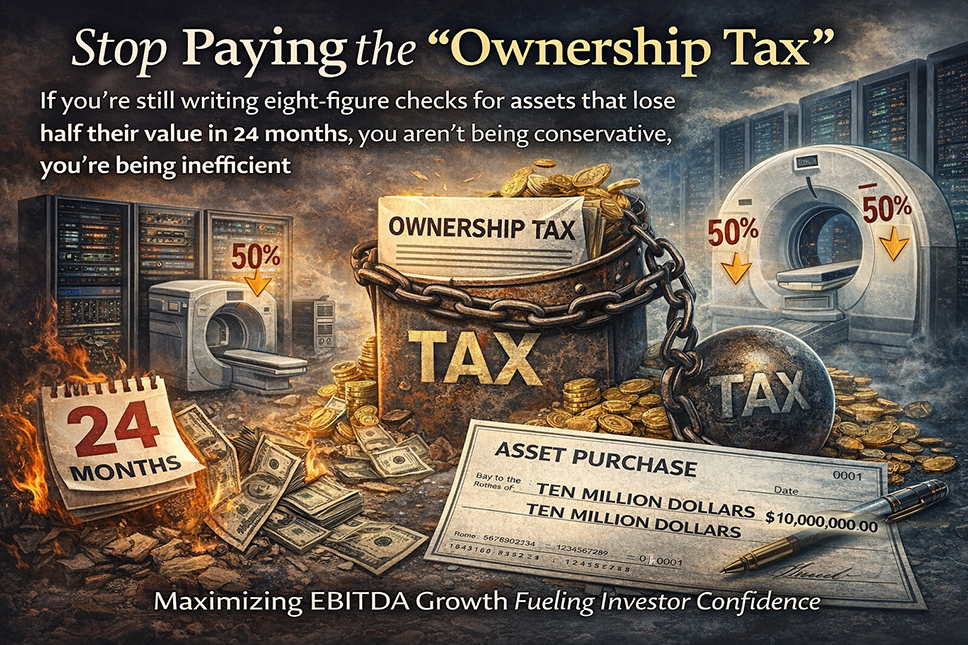
If you’re still writing eight-figure checks for assets that lose half their value in 24 months, you aren’t being conservative, you’re being inefficient.
The Move: Pivot to a model that aligns your payments with the tech’s actual utility. Keep your cash in the bank, keep your tech at the cutting edge, and stop overpaying for the “privilege” of owning a depreciating asset.
Ready to stop the bleed?
The Bottom Line: In 2026, the most successful companies don’t own their tools; they own the market. Use your credit rating as a weapon, not just a badge.