Airlines, corporate flight departments, and cargo operators all lean on leasing to grow fleets without locking up capital in a single depreciating asset. Yet many finance teams still misunderstand how the model actually works internally, which leads to poor lease selection and missed structuring opportunities.
This guide breaks down how aircraft leasing works in practice, the three main lease types, and where it fits into a broader equipment financing strategy.
Key Takeaways
- Leasing preserves capital by letting operators use aircraft without full ownership costs
- Wet, dry, and damp leases differ mainly in who supplies crew, maintenance, and insurance
- Lease lifecycles run through sourcing, negotiation, compliance, and return conditions
- Costs hinge on aircraft age, lease term, maintenance reserves, and lessee credit strength
- Structured financing from Commercial Funding Partners can complement traditional aircraft leasing
What Is Aircraft Leasing?
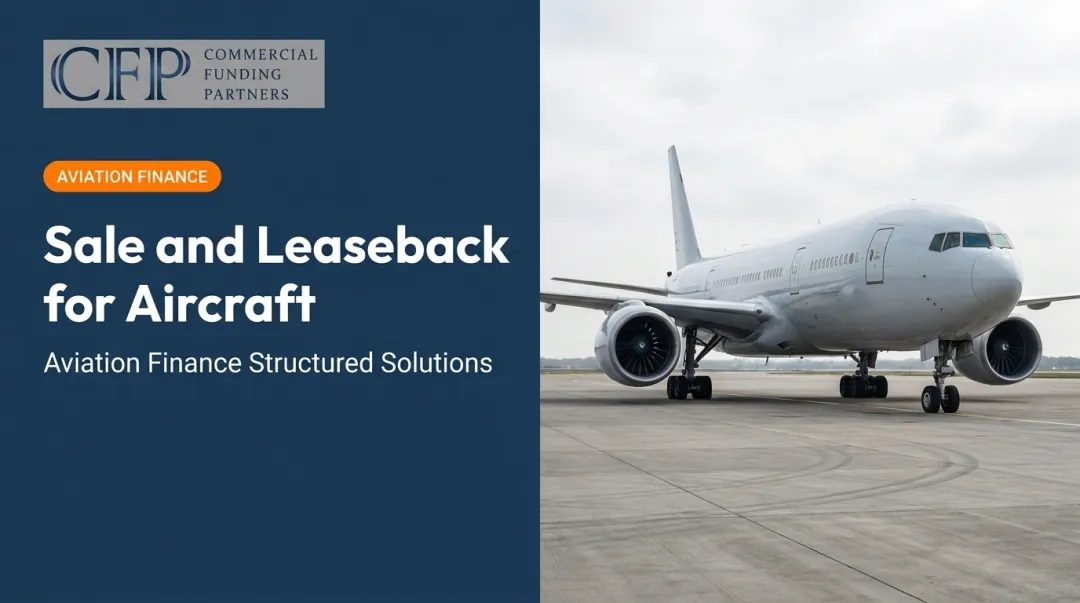
Aircraft leasing is an arrangement where an aircraft owner (the lessor) grants an operator (the lessee) the right to use the aircraft for a defined period in exchange for payments. The lessee gets access to the asset while the lessor keeps ownership and residual value exposure.
Why it exists: Aircraft are extraordinarily expensive. A leasing structure solves the operational problem of needing modern equipment without absorbing the full capital burden or the risk of guessing wrong on resale value years later.
What it's not:
- Chartering — pays for individual flights, not usage rights over a defined term
- Purchase loan — builds toward ownership; leasing is a rental-based right to operate
Leasing has persisted as the dominant model even as aircraft prices and financing options have shifted, because it gives airlines flexibility to modernize fleets on a schedule rather than being stuck with aging assets.
The three main lease structures—wet, dry, and damp—set how that operational relationship works day to day:
- Dry lease — aircraft only; crew and maintenance fall to the lessee
- Wet lease — aircraft plus crew, maintenance, and typically insurance stay with the lessor
- Damp lease — hybrid: lessor supplies aircraft and crew; lessee usually handles maintenance
That split shapes nearly every stage of how the lease runs in practice.

How Does Aircraft Leasing Work?
A lease moves through defined stages, from identifying a need to returning the aircraft at term-end. Each stage shapes the financial and operational outcome.
Initiation: Identifying the Need and Lessor
The process starts when an airline or operator spots a capacity gap. Maybe a route is underserved. Maybe a plane is grounded for unscheduled maintenance. The operator then searches the market for a suitable lessor.
Initiation can be:
- Planned — tied to fleet renewal cycles, scheduled well in advance
- Reactive — triggered by sudden demand spikes or maintenance groundings
Common bottlenecks include limited aircraft availability, strict creditworthiness requirements from lessors, and mismatches between what's available and what the operator actually needs.
Core Operation: Negotiation and Lease Structuring
Lessor and lessee negotiate the lease rate, term length, security deposit, maintenance reserves, and return conditions before anyone signs anything.
Once terms are agreed, the lease agreement is drafted, the aircraft is delivered in airworthy condition, and the lease term formally begins. Per SMBC Aviation Capital's analysis, a base rate for new-delivery aircraft is typically agreed with the airline in advance. That rate can still shift with interest rate movements between signing and actual delivery.
Payment amounts are ultimately driven by:
- Lease rate factor and current market lease rate
- Aircraft age and technical condition
- Lessee's credit profile
- Funding-rate benchmarks lessors use to match term length
Regulation and Control: Compliance and Risk Management
Both parties maintain control throughout the lease term via regulatory compliance, insurance requirements, and ongoing maintenance monitoring. This isn't a "sign and forget" arrangement.
Risk management runs on two tracks:
- Financial — credit analysis, currency and interest rate exposure
- Operational — maintenance standards, insurance coverage, airworthiness directives
This stage matters because non-compliance or poor maintenance discipline can trigger disputes, financial penalties, or expensive aircraft damage discovered at lease-end, when problems are hardest and most costly to fix.
Output: Lease-End and Return Conditions
For the lessee, the lease delivers continued fleet access. For the lessor, it delivers a recurring income stream and eventual asset recovery.
Return conditions are critical. According to ACC Aviation's report on lease returns, pre-redelivery planning often begins 24 months before the actual redelivery date. That work typically includes a physical inspection, a final redelivery check, and preparation of complete aircraft records.
Airworthiness documentation, records of modifications and repairs, and component histories all feed directly into whether a lessor can quickly re-lease or sell the aircraft. Poor lease-end execution leads to disputes and delayed redeployment. Complete records and on-time redelivery let the lessor re-lease or sell the aircraft without delay.

Types of Aircraft Leases
The three lease structures split responsibilities differently, and choosing the wrong one for your situation creates friction fast.
Wet Lease
A wet lease includes the aircraft, crew, maintenance, and insurance — the lessor handles it all. Under a wet lease, the aircraft operates under the lessor's air operator certificate, per UK Civil Aviation Authority guidance.
This structure fits short-term capacity needs. Lufthansa Group's 2024 wet-lease agreement with airBaltic is a good real-world example: up to 21 aircraft for summer peak demand and 5 for winter, giving Lufthansa flexibility without a long-term commitment.
Dry Lease
A dry lease provides only the aircraft. The lessee supplies its own flight crew and exercises operational control, according to AOPA's guidance on aircraft leasing. The lessee also handles maintenance and insurance.
This is the go-to structure for longer-term fleet expansion, since it gives the operator full control over how the aircraft is flown and maintained.
Damp Lease
A damp lease is a hybrid. The aircraft comes with a cockpit crew but not cabin attendants. The lessee manages maintenance and insurance. It suits medium-term needs that fall between the wet lease's full-service model and the dry lease's full-control model.
| Responsibility | Wet Lease | Damp Lease | Dry Lease |
|---|---|---|---|
| Aircraft | Lessor | Lessor | Lessor |
| Cockpit crew | Lessor | Lessor | Lessee |
| Cabin crew | Lessor | Lessee | Lessee |
| Maintenance & insurance | Lessor | Lessee | Lessee |
| Typical use | Short-term capacity | Medium-term hybrid | Longer-term fleet expansion |
| Operational control | Lessor | Shared | Lessee |
Use the table to match term length and control needs before you lock a structure.

Where Aircraft Leasing Fits in Business and Equipment Financing
Leasing fits into an airline's or operator's broader fleet strategy at the planning stage — before route launches, before seasonal capacity increases. It performs best when:
- Capacity needs change rapidly
- Available capital is limited
- The operator wants to avoid residual value risk on aging aircraft
But leasing isn't the only aviation-adjacent financing decision businesses face. Aircraft component manufacturers, MRO shops, and ground support operators all need equipment financing too, and their needs look different from an airline's.
Commercial Funding Partners (CFP) structures capital for this broader aviation supply chain, financing transactions from $250,000 to $300 million or more. Documented examples include:
- A $5.9 million, 48-month operating lease funding two jets and a rebuilt aircraft engine for fleet expansion
- A $1.5 million tax lease for an aerospace supply-chain manufacturer
- A $1 million capital lease for an aerospace and defense manufacturer's clean-room installation
Beyond aircraft themselves, CFP finances the equipment that keeps the aviation supply chain running:
- Ground support gear such as pushback tugs and refueling trucks
- MRO tools such as engine stands and borescopes
- In-flight systems such as avionics and flight data recorders
For component manufacturers building custom production lines, progress-payment financing often fits best, funding deposits through installation over 6-18 month builds. For an MRO operator with existing equipment, a sale-leaseback frees working capital while the gear stays in service.

Conclusion
Aircraft leasing works because it's a structured, multi-stage process: sourcing, negotiation, compliance, and disciplined lease-end management. Understanding each stage, not just the headline lease rate, separates a well-structured lease from an expensive surprise.
Whether you're an airline planning fleet growth or a manufacturer financing aviation equipment, that working knowledge produces clearer term sheets, stronger residual assumptions, and fewer costly missteps at lease-end.
Frequently Asked Questions
What are the three types of aircraft leasing?
Wet, dry, and damp leases. Wet leases include crew, maintenance, and insurance from the lessor; dry leases put those responsibilities on the lessee; damp leases split the difference by including cockpit crew only.
Do airlines buy their planes or lease them?
Most airlines use a mix of both. As of the end of 2023, 58% of the global commercial fleet was leased rather than owned, a share that shows how central capital efficiency is to fleet planning.
How much does it cost to lease an aircraft?
Costs vary widely based on aircraft age, type, lease term, and the lessee's credit profile. Quoted rates move with those factors, so compare current market lease rates for the specific aircraft type and term you need.
What is the difference between an operating lease and a finance lease?
Under an operating lease, the aircraft returns to the lessor at term-end. A finance lease transfers substantially more ownership risk and reward to the lessee, who may have the option to purchase the aircraft when the term ends.
Who is responsible for aircraft maintenance during a lease?
The lease contract decides. Full-service (wet) structures usually leave maintenance with the lessor; aircraft-only (dry) structures put airworthiness, maintenance reserves, and related compliance on the lessee.
Can businesses finance other aviation-related equipment besides aircraft?
Yes. Manufacturing, MRO, and ground support equipment tied to aviation operations can be financed through structured equipment finance providers like Commercial Funding Partners, which handles transactions from $250,000 to $300 million.