Many banks and vendor finance programs won't touch these "soft costs." They'll finance the machine because it's collateral they can repossess. Shielding, electrical upgrades, and commissioning don't fit that model, so providers pay out of pocket or delay go-live.
This guide breaks down what installation costs actually include, why conventional financing leaves gaps, and how Commercial Funding Partners (CFP) structures deals that cover the whole project.
Key Takeaways
- Soft costs can add hundreds of thousands beyond the MRI, CT, or PET-CT equipment price
- Traditional bank loans often leave shielding, electrical, rigging, and commissioning unfunded
- Structured equipment finance can bundle up to 100% of project costs, soft costs included, into one payment
- Progress and milestone funding align cash outflows with multi-phase imaging installations
What Installation Costs Actually Include (and Why They Add Up)
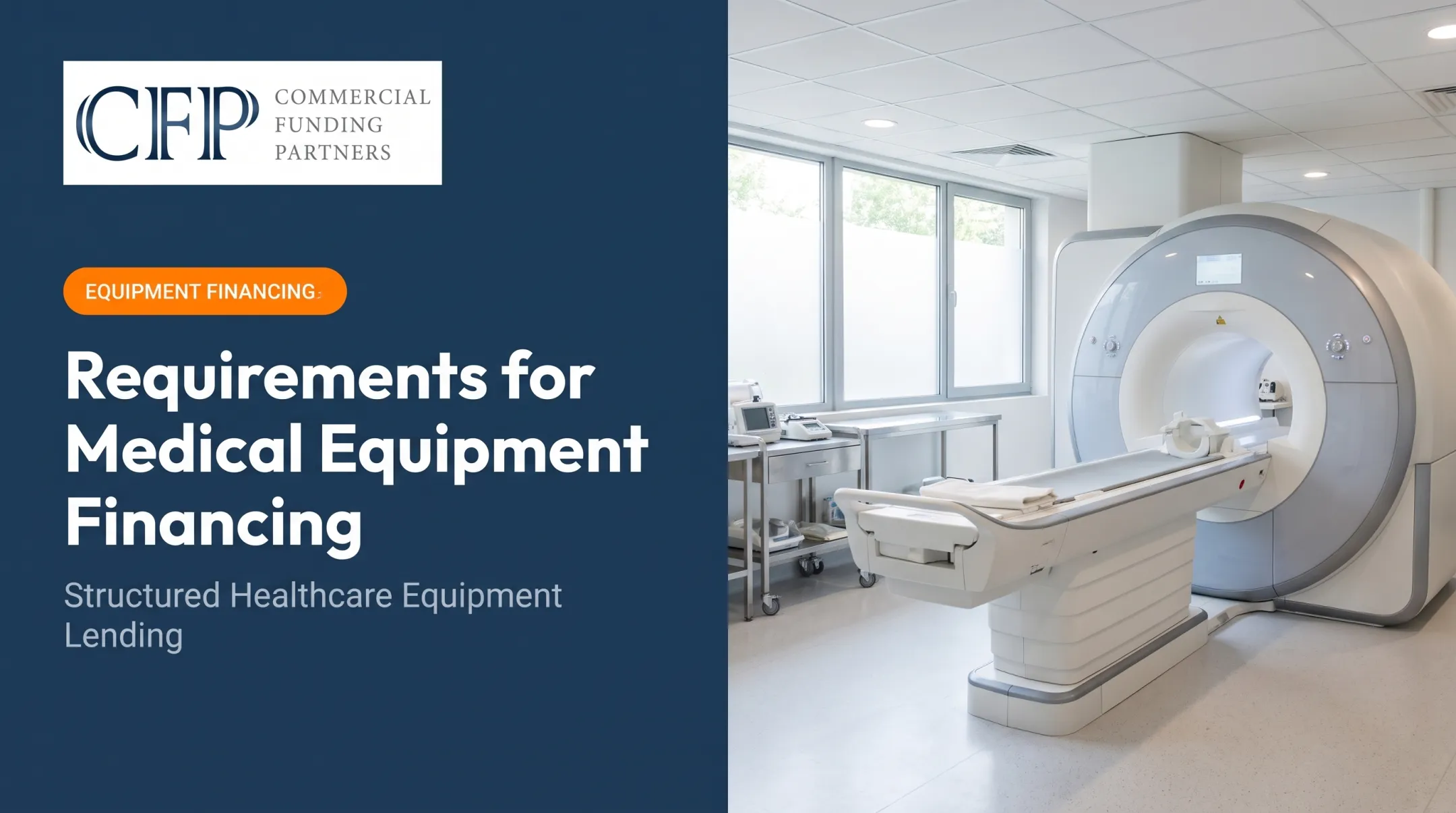
An imaging suite is a construction project wrapped around a scanner. Before that scanner scans a single patient, several specialized trades and vendors have to finish their work.
Facility prep varies by modality:
- MRI suites need RF shielding; enclosure costs have historically run $50,000–$110,000 depending on room size and site conditions (AAPM Report 20)
- CT and X-ray rooms need radiation shielding calculated to the specific unit and layout
- Dedicated electrical service, grounding, and often UPS backup
- HVAC and chilled-water upgrades to keep the magnet or gantry within operating tolerance
Rigging and logistics come next. Multi-ton MRI and CT systems don't fit through standard doorways. Retrofit buildings often need wall removal, crane access, or temporary structural work just to get the system into the room.

Commissioning, calibration, and acceptance testing are required before clinical use. Physicists and OEM technicians have to sign off before the first patient is scanned.
Beyond the room itself:
- Software, PACS integration, workstations, and networking
- OEM-required technologist and staff training before go-live
There's no universal published percentage for how much these soft costs add to total project cost. Every site is different, so ask vendors for a line-item breakdown rather than a rule of thumb. That add-on is rarely small.
Why Banks and Vendor Financing Often Fall Short on These Costs
Conventional bank equipment loans are collateral-based. The bank underwrites against the resale value of the hard asset — the scanner itself — because that's what it can repossess if things go wrong. Shielding bolted into a wall or electrical conduit run through a ceiling isn't collateral in the same sense, so it doesn't fit the model.
Vendor captive finance programs often behave similarly. The OEM's financing arm will cover the machine but push installation and facility costs back to the buyer as a separate line item, sometimes without much notice until the project is well underway.
Providers typically cover the gap in one of two ways, and neither works well:
- Draw down working capital, locking cash into construction that can't fund staffing, marketing, or other growth priorities
- Delay installation while scraping together cash, which pushes back the revenue start date even as scanner lease or loan payments come due

Financing Structures Built to Cover Full Project Costs
Several structures exist specifically to close this gap:
- Full-project equipment finance agreements — bundle equipment plus soft costs (installation, engineering, freight, commissioning) into a single amortizing payment, financing up to 100% of eligible project costs in one facility
- Progress payment and milestone funding — funds release as shielding, electrical work, and commissioning milestones are completed, rather than in one lump sum at delivery
- Interest-only-during-installation structures — reduce cash strain during the build-out period, before the scanner is generating billable studies
- Construction draw-style financing — functions like a mini construction loan tied to the equipment purchase, suited to ground-up suites or major renovations
Capital leases versus operating leases matter here too. Under ASC 842, both generally create a right-of-use asset and lease liability. They treat costs differently, though: capital leases amortize the asset and expense interest separately, while operating leases recognize a single lease cost (Journal of Accountancy on ASC 842). Have your CFO and auditors weigh in before committing to a structure — the classification of bundled soft costs affects your books.

How CFP Finances Medical Imaging Installation Projects
CFP finances the parts of the project banks typically won't book: software licenses and integration, engineering services, installation and labor, freight, commissioning, training, project management, and controls integration.
Coverage is built on a few specific mechanisms:
- Progress and milestone funding for long build cycles or phased installs, common in imaging projects that run 6 to 18 months from order to go-live
- Construction draws and interest-only periods during install and commissioning, so payments don't front-load before the room generates revenue
- Bank Overflow Desk™ for providers whose bank funded the equipment but declined installation and soft costs, backed by a written Banker Promise that protects your existing bank relationship
CFP funds $250,000 to $300 million per project and engages early with EPC firms, automation integrators, and specification consultants while the project is still being scoped, not after the budget is locked.
In one recent healthcare deal, CFP structured a $12 million facility with direct payments to vendors, suppliers, and contractors, cutting the back-and-forth of managing multiple payees.
Timelines matter in imaging projects. A structuring specialist typically responds within one business day, which keeps a tight installation schedule from stalling at the financing stage.

Budgeting and Qualifying for Full-Project Financing
Before approaching any lender, put together a complete project cost breakdown:
- Signed equipment quote (check the expiration date; quotes older than 60-90 days often get re-priced)
- Contractor or EPC bid covering shielding, electrical, and HVAC
- OEM commissioning and training quote
- Recent financial statements
- Project timeline with installation milestones
Lenders want to see the whole picture, not just the scanner invoice. Bundling everything into one facility simplifies approval compared with juggling a separate bank loan for the equipment and a construction loan for the buildout. You coordinate fewer parties and cut the risk of a scheduling mismatch between draws.
Frequently Asked Questions
Are imaging centers a good investment?
Imaging centers can generate strong reimbursement-driven revenue, but profitability hinges on patient volume, payer mix, and total project cost control. A structure that preserves working capital during buildout is a meaningful part of that equation.
Can installation and facility prep costs be included in equipment financing?
Many soft costs (installation, engineering, freight, commissioning, and training) can be bundled into one facility. True real property improvements often need separate structuring; CFP can cover eligible installation and soft costs alongside equipment under one relationship.
How long does it take to get financing approved for an imaging installation project?
Timelines vary by project complexity, but engaging a lender early (during planning, not after bids land) speeds approval considerably. CFP's structuring specialists respond within one business day of a request.
What happens if installation costs exceed the original budget?
Milestone and progress-payment structures give you some flexibility here, since funding ties to completed work rather than a fixed lump sum. Keep your lender informed the moment scope changes so the facility can be adjusted rather than renegotiated from scratch.
Should I use one lender for both equipment and installation, or separate financing?
Bundling with one lender usually means simpler administration and one payment to track. Splitting can make sense if your bank already offers favorable equipment terms but won't touch soft costs: that gap is what an overflow structure is built to fill.
Can a bank-approved equipment loan be paired with separate installation financing?
Yes. CFP's Bank Overflow Desk is built for this: the bank keeps the equipment loan and deposit relationship, and CFP finances the installation and soft-cost portion the bank's credit policy won't allow.