Introduction
A new automation line doesn't show up overnight. Neither does a power generation system, a data center buildout, or a multi-phase packaging installation. These projects can take 6 to 18 months or longer to engineer, fabricate, ship, and commission.
McKinsey estimates that data centers alone can take 12 to 36 months just between the initial request and the start of construction, depending on design, size, and location.
That timeline creates a problem: financing typically closes in a single event, but the cash isn't needed all at once.
You'll hear "milestone-based funding" used differently depending on who's talking. In venture capital, it means equity released in stages as a startup hits growth targets. In commercial and equipment finance, it means debt capital disbursed in stages as a physical project reaches completion points.
This guide covers the second kind: milestone-based funding for equipment purchases and capital projects, how it works, and how to structure it.
Key Takeaways
- Capital is released in tranches tied to verified progress, not one lump sum at closing
- Interest applies only to funds actually drawn, preserving cash during installation
- Unlike VC milestone investing, this is debt-based financing with zero equity dilution
- Objective milestone definitions and steady lender communication prevent funding delays
What Is Milestone-Based Funding?
Milestone-based funding is a financing structure where capital is disbursed in stages as a project hits specific, predefined completion points, rather than funding the full amount at loan closing.
Compare that to a traditional term loan. There, the entire loan amount is disbursed upfront, and interest starts accruing on the full balance immediately, even if the equipment is sitting in a fabrication shop three states away with months to go before installation. You'd be paying full interest on machinery you can't yet use.
Milestone structures exist because extended-build projects don't work on a single-invoice timeline. Automation systems, manufacturing lines, and energy equipment involve vendors and integrators who bill in phases as work gets completed. The financing needs to match that rhythm.
A few terms you'll run into along the way:
- Progress payments – payments tied to a percentage of work completed or a specific milestone reached
- Construction draws – funds released against a prearranged disbursement plan as work progresses
- Interest-only-during-installation – a period where you pay interest only on funds drawn so far, not the full committed amount
CFP structures its progress payment and milestone facilities around this same logic. Typical tranche triggers include:
- Equipment deposits
- Engineering and design
- Fabrication
- Factory acceptance testing
- Shipment
- Installation and integration
- Final commissioning
Milestone Funding vs. VC-Style Milestone Investing
If you've researched this topic before, you may have found articles about venture capital. That's a completely different animal.
VC-style milestone investing exchanges equity for capital as a startup hits growth benchmarks: user counts, revenue targets, product launches. The National Venture Capital Association's model documents include mechanics for these tranched, milestone-based financings, where each tranche typically means giving up more ownership.
Equipment and project milestone funding is debt, not equity. Capital is tied to physical construction and delivery stages, not startup growth. You keep 100% ownership of your business throughout.
How Milestone-Based Funding Works: A Step-by-Step Look
Every milestone facility follows roughly the same sequence, even though the specific terms are always customized to the project.
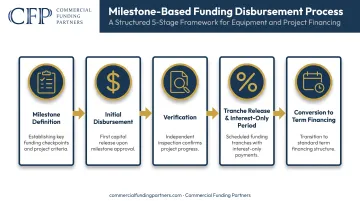
Milestone definition. Lender and borrower agree upfront on the project stages that will each trigger a tranche (deposit, fabrication, shipment, installation, commissioning) and the funding amount tied to each one.
Initial disbursement. Many structures release funds at closing to cover early soft costs: equipment deposits, engineering, design work, or permitting. This keeps the project moving without draining working capital before construction even starts.
Verification. Before the next tranche is approved, the lender confirms milestone completion. This might mean vendor invoices, inspection reports, or completion certificates, depending on the lender and the project.
Tranche release and interest-only period. As each stage completes, the lender releases the corresponding draw. Interest during this phase typically accrues only on funds actually disbursed, not the full committed facility.
Conversion to term financing. Once the equipment is installed, tested, and accepted, the facility converts to a standard amortization schedule for the remaining term.
Why does this matter in practice? Lead times for large equipment are longer than most finance teams expect. Automation World documented a custom motor-control-center project with a standard 14-month lead time from drawing generation through panel build and commissioning, and that was considered a fast-track case after the supplier trimmed it down.
When 14 months separate contract signing from a fully operational line, funding it all on day one means paying interest on idle capital for the better part of a year.
Key Benefits of Milestone-Based Funding for Growing Businesses
Milestone-based funding gives growing businesses several practical advantages:
- Pay interest only on capital already deployed, not the full loan amount from day one. Commercial construction lenders generally permit interest-only payments during the build phase.
- Reduce shared risk: lenders release funds only against verified progress, and borrowers avoid overborrowing or idle debt while equipment is built.
- Match funding draws to progress billing schedules EPC firms, integrators, and equipment manufacturers already use.
- Flex around multi-phase projects with construction draw and step-up structures for seasonal cash flow, phased rollouts, and extended commissioning.
CFP builds these structures into its large equipment and project financing: progress payment, milestone funding, construction draw, and interest-only-during-installation. It can finance up to 100% of eligible project costs, including soft costs many banks won't book at all: engineering, installation, software integration, freight, and commissioning.
In one deal, CFP arranged $10 million to fund deposits and milestone payments across a long metals-production equipment cycle, keeping the client's cash flow intact through the entire build.
Best Practices for Structuring a Milestone Funding Agreement
Getting a milestone facility right comes down to three things:
- Define milestones with objective, verifiable criteria. Tie each tranche to a specific invoice, inspection sign-off, or delivery confirmation—not vague language like "substantially complete."
- Build in flexibility for delays and scope changes. Structure the agreement so reasonable schedule slippage on complex installs does not automatically block the next tranche.
- Maintain thorough documentation and proactive communication. Keep invoices, inspection records, and status updates current, and flag delays to your lender before funding stalls.
CFP's structuring specialists work through this with borrowers directly, coordinating across multiple vendors and manufacturers so milestone verification doesn't stall the project.
Is Milestone-Based Funding Right for Your Project?
This structure fits a specific category of project: extended timelines, multiple vendors, and phased billing. Good candidates include:
- Large-scale manufacturing automation lines
- Data center and digital infrastructure buildouts
- Power generation and energy storage installations
- Food processing or packaging lines with multi-vendor builds
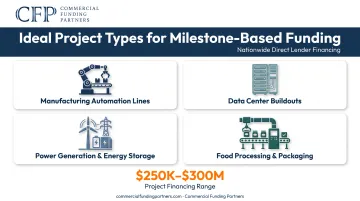
It's most valuable for middle-market and enterprise businesses financing complex equipment or construction projects in the $250,000 to $300 million range, where a single-close loan simply doesn't match the project's real funding needs.
When a single-close structure or prior offer doesn't match that build schedule, the project may still be fundable. CFP's Second Opinion Review™ re-underwrites previously declined or poorly structured deals from scratch, at no cost.
For projects outside a bank's standard lending box, CFP's Bank Overflow Desk™ works alongside your existing banking relationship rather than competing for it. The bank keeps the relationship; CFP handles the complex equipment financing piece.
Frequently Asked Questions
What is milestone financing and how does it work?
Milestone financing releases loan funds in stages tied to verified project progress rather than all at once. Interest typically applies only to funds drawn at each stage, not the full committed amount.
What types of projects qualify for milestone-based funding?
Large, extended-build equipment and infrastructure projects with phased vendor billing fit best: automation lines, power generation systems, or facility buildouts spanning six months or more.
How is milestone-based funding different from a traditional equipment loan?
Traditional loans fund in full at closing, so interest starts on the entire balance immediately. Milestone funding disburses in tranches as the project progresses, reducing carrying costs during installation.
Does milestone-based funding cost more than a lump-sum loan?
Structuring is more involved, but businesses often save on interest since they aren't paying on undrawn capital sitting idle for months. That savings can offset the added complexity.
What happens if a project milestone is delayed?
A well-structured agreement builds in flexibility for delays, so the timeline can shift without automatically forfeiting the next funding tranche. Confirm delay provisions and notice requirements before you sign.
How do I get started with milestone-based equipment financing?
Reach out to a structuring specialist with your project timeline, vendor billing schedule, and total cost estimate. They will custom-build a draw schedule around your actual build plan, typically with a response within one business day.